

EPSO AD5 Part 2: How to Prepare for the 2027 Tests
The first phase of the EPSO AD5 Graduates competition (EPSO/AD/427/26) is over. You have now completed the three reasoning tests: verbal, numerical and abstract reasoning.
Attention now turns to Part 2 of the AD5 competition, which will assess three additional tests:
- EU Knowledge Test (multiple-choice questionnaire).
- Digital Skills Test (multiple-choice questionnaire).
- Written Test (Free-Text Essay on EU Matters – EUFTE).
According to EPSO's latest announcement, Part 1 results are expected in the first quarter of 2027, while Part 2 is expected to take place in Spring 2027.
To qualify for the second phase, you must achieve the minimum required scores for the three reasoning tests in Part 1. If admitted to Part 2, only your verbal reasoning test score will contribute to your preliminary and final scores. Thorough preparation is therefore essential to achieving a competitive ranking and maximising your chances of being placed on the reserve list. Here is what you need to know about each test, its requirements and how to prepare effectively.
EPSO AD5 EU Knowledge Test
1. Test format
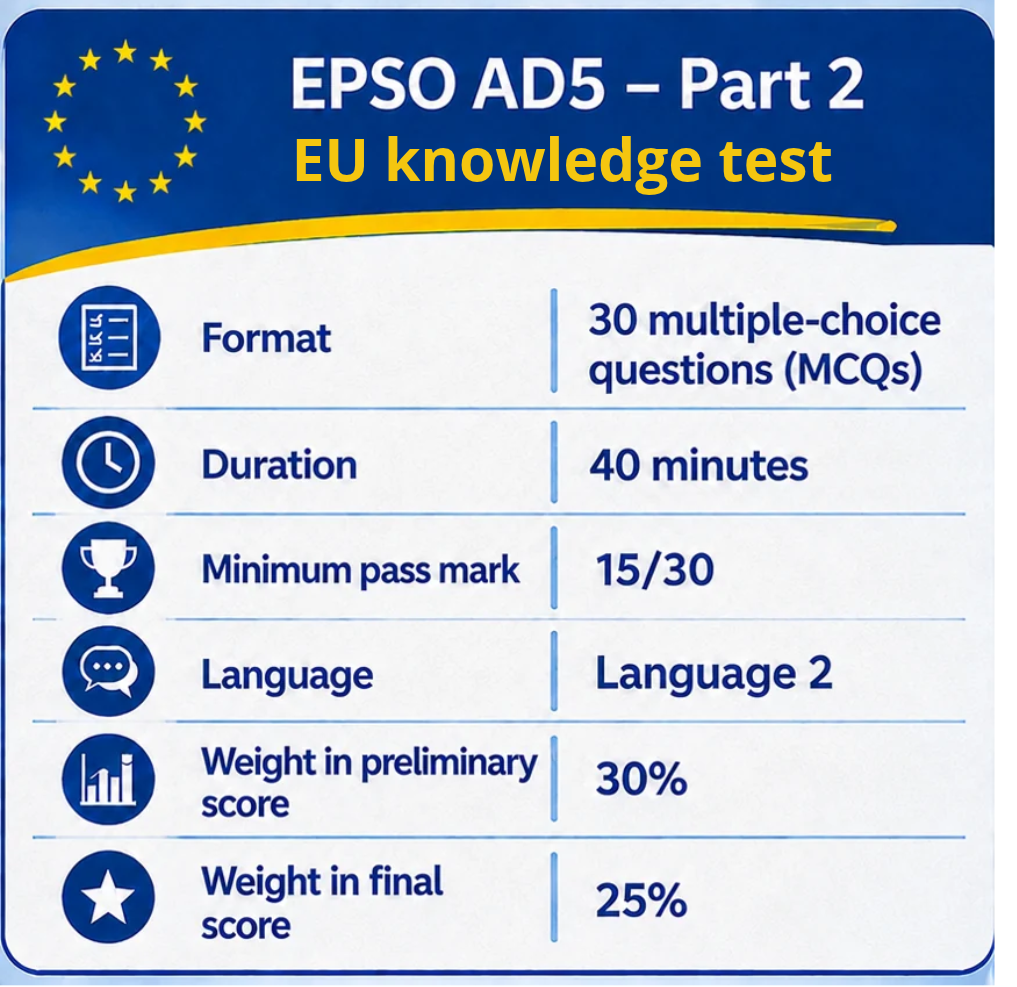
The EU Knowledge Test assesses your understanding of the European Union, its institutions, decision-making processes and main policies.
2. What should you study?
Your preparation should cover five main areas:
- EU institutions: roles, responsibilities and interactions.
- EU decision-making and legislative procedures.
- The functioning of the European Union.
- Major EU policies and areas of action.
- EU values, principles and objectives.
Understanding how the EU works is just as important as memorising facts about its institutions.
3. Free resources for EU Knowledge preparation
Start by testing your knowledge with:
EPSO will also publish the references to the source material used to develop the test approximately two months before the examination.
4. Prepare with ORSEU
Looking to strengthen your understanding of the European Union? ORSEU has partnered with Collegio Europeo di Parma to offer the 7-hour online course EU in a Nutshell.
Available for 12 weeks after purchase, this course covers essential topics including EU history, the institutional framework, the EU budget and the Common Agricultural Policy.
Practising multiple-choice questions is essential to becoming familiar with the test format and identifying knowledge gaps.
ORSEU offers dedicated EU Knowledge preparation materials, including online practice tests.
Discover ORSEU's EU Knowledge Test preparation materials
EPSO AD5 Digital Skills Test
1. Test format
The Digital Skills Test evaluates your ability to use digital technologies effectively and responsibly in a professional environment. It is the first time it will be featured since the 2023 EPSO reform. This is what we know about this test.
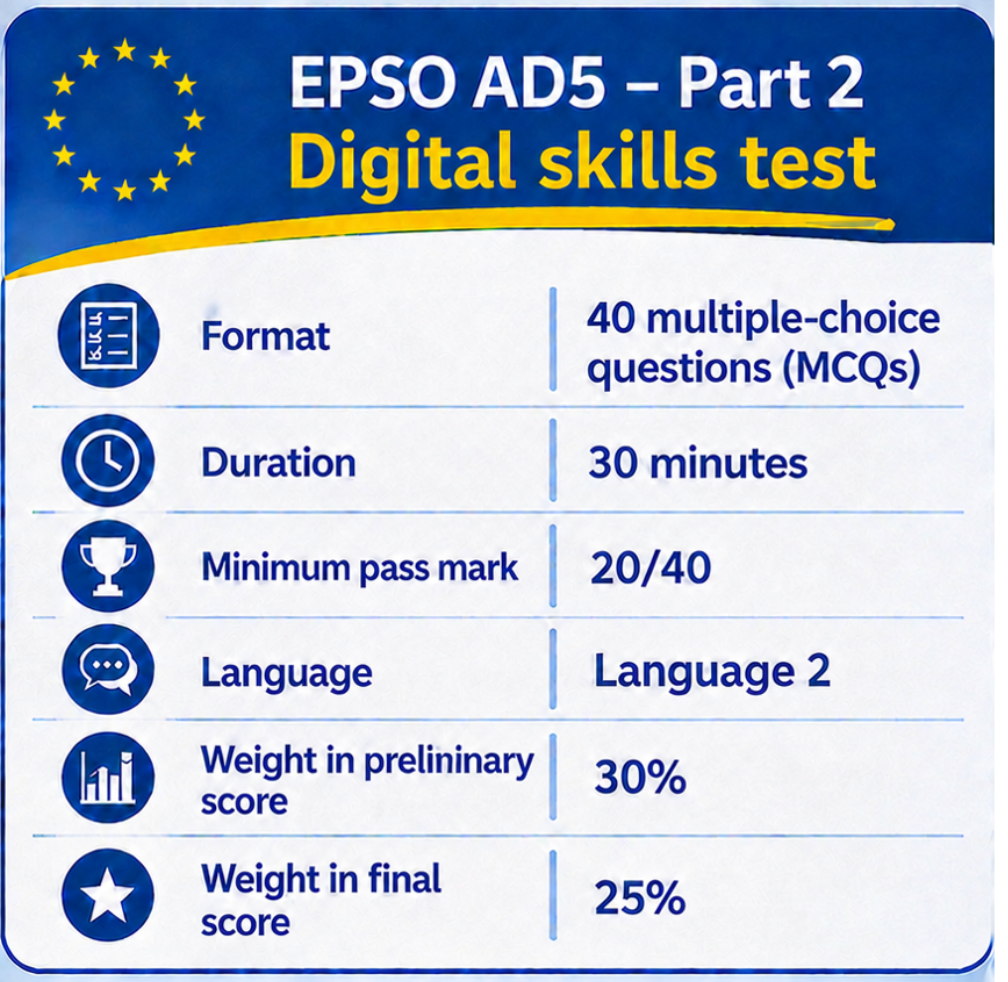
It is based on the five competence areas of the European Digital Competence Framework (DigComp).
2. What are the five DigComp areas?
- Information and Data Literacy : Searching for, evaluating, organising and managing digital information and data.
- Communication and Collaboration: Using digital tools to communicate, share information and collaborate online.
- Digital Content Creation: Creating and editing digital documents, spreadsheets and presentations, while understanding copyright and basic programming concepts.
- Safety: Understanding cybersecurity, data protection, privacy, passwords and online threats.
- Problem-Solving: Troubleshooting technical issues, selecting appropriate digital tools and adapting to new technologies.
3. Free resources for Digital Skills preparation
The Europass Digital Skills Assessment is a useful starting point. It allows you to assess your digital competence across the five DigComp areas and identify topics requiring further work.
4. Prepare with ORSEU
ORSEU offers a dedicated AD5 Digital Skills practice test designed around the five official competence areas.
The online test includes 40 multiple-choice questions covering all five DigComp areas in 30-minutes under timed conditions.
Discover ORSEU's AD5 Digital Skills Test
EPSO AD5 Written Test (EUFTE)
1. Test format
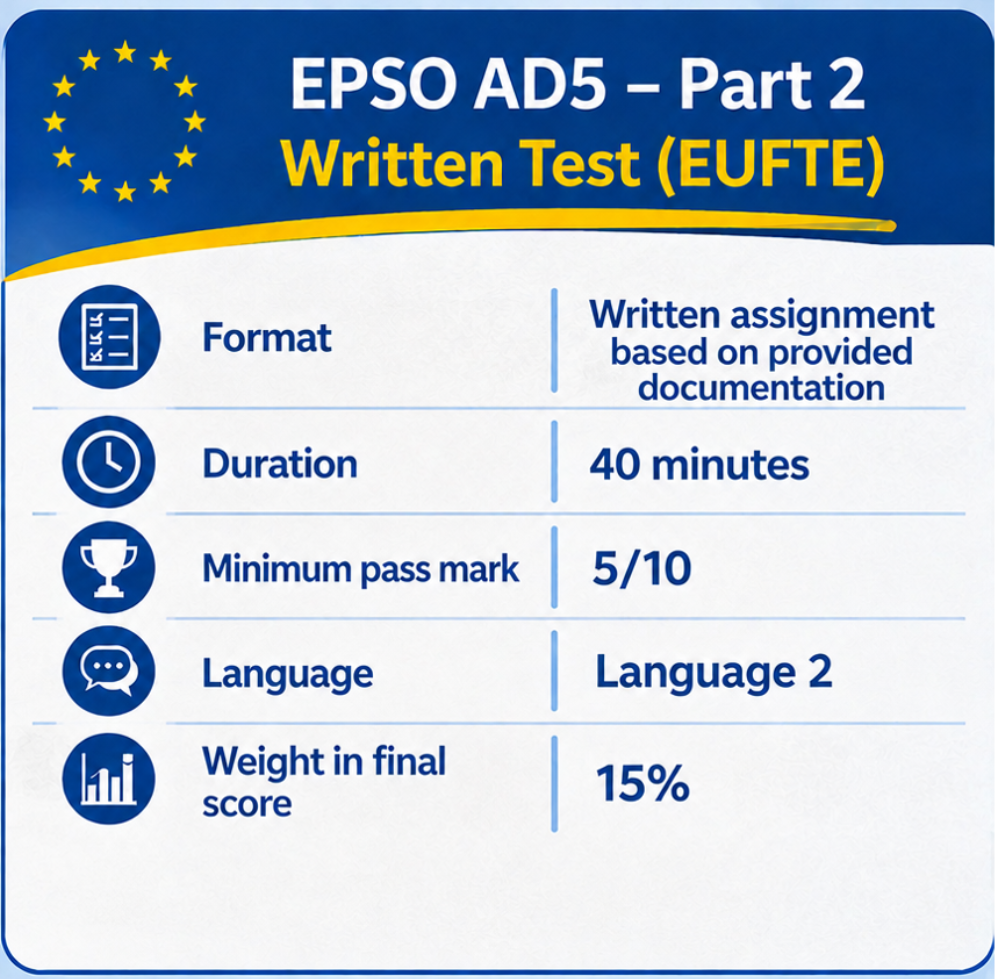
The Free-Text Essay on EU Matters (EUFTE) assesses your ability to analyse documentation and communicate information clearly, logically and effectively in writing.
Candidates receive documentation relating to EU matters and must complete a written assignment based on that material.
2. What does EPSO assess?
The EUFTE evaluates five key competencies:
- Logical structure: Presenting ideas in a clear and coherent order.
- Conciseness: Communicating effectively without unnecessary information.
- Clarity and readability: Producing accessible, easy-to-understand writing.
- Audience and purpose: Adapting your writing style to the assignment.
- Effective use of information: Selecting and using relevant elements from the provided documentation.
Important: The EUFTE is neither a language test nor a factual EU knowledge test. It focuses on written communication and your ability to work effectively with the information provided.
3. How should you prepare for the EUFTE?
Preparing for the EUFTE requires more than good writing skills. You need to understand how EU institutions communicate, adapt your writing to different audiences and produce the right type of document in response to an assignment.
We recommend three practical preparation exercises:
a. Analyse real EU communications
Study different types of EU documents, such as summaries, press releases and speeches. Identify their key characteristics by looking at the assessment anchors:
- Purpose: What is the document trying to achieve?
- Target audience: Who is the intended reader?
- Style and tone: Is the language formal, informative, persuasive or technical?
- Structure: How is the information organised and presented?
Understanding these features will help you recognise the conventions of EU institutional writing and produce documents that meet the requirements of the assignment.
b. Compare different EU documents
Look at how the same topic is presented across different EU documents. Identify differences in audience, tone, style and structure.
This exercise will help you adapt your writing to the type of document requested in the EUFTE assignment.
c. Practise under exam conditions and seek feedback
Use real European Commission communications as preparation material. Read a document carefully, imagine a possible assignment based on its content and draft your response within the 40-minute time limit.
Whenever possible, practise with a friend who can provide constructive feedback. Ask them to assess your work against the five EUFTE assessment anchors and identify areas for improvement, particularly in document analysis, structure and writing style.
The key to success is to practise analysing, adapting and writing different types of EU institutional documents before the examination.
With only 40 minutes available, a clear methodology is essential. Make sure you practise how to:
- Analyse the documents and identify key information (before starting your 40-minute timer).
- Interpret the assignment and identify what is expected of you.
- Structure your response logically.
- Select relevant arguments rather than reproduce all the information.
- Write concise, precise sentences.
- Manage your time between reading, planning, writing and reviewing.
4. Prepare for the EUFTE with ORSEU
ORSEU's dedicated online course will help you understand the expectations of the EPSO Written Test, master the required methodology and identify the skills you need to develop before tackling the EUFTE.
Discover ORSEU's EU Written Test preparation course
Get ready for EPSO AD5 Part 2 this Spring 2027 with ORSEU Concours' targeted preparation tests and courses covering EU Knowledge, Digital Skills and the Written Test.
Share this content